


A bulk bag can be strong enough to lift a tonne and still be unsuitable for food. Food grade packaging requirements go beyond load capacity, fabric weight and dimensions. They address whether every material that could touch the product, directly or indirectly, is appropriate for its intended food use and has been controlled through manufacture, storage and supply.
For food processors, ingredient importers and agricultural suppliers, the detail matters. A bag used for sugar, flour, starch, grains or powdered ingredients may affect product safety if its liner, stitching, printing ink, cleaning process or previous use has not been properly considered. The right specification protects product quality while helping operators meet their own hygiene and due-diligence obligations.
What makes packaging food grade?
Food grade is not a single universal badge applied to every bag. It describes packaging materials and processes that are suitable for contact with food under defined conditions. Suitability depends on the food being packed, whether contact is direct, the time and temperature of contact, and whether the product is dry, fatty, acidic or moisture-sensitive.
In Great Britain, food contact materials must be safe and must not transfer constituents into food at levels that could endanger health, change the food composition unacceptably or adversely affect taste and odour. Relevant retained food contact materials legislation, good manufacturing practice requirements and application-specific rules all need to be considered. Businesses supplying into Northern Ireland or wider European markets may have additional EU-facing requirements, so the destination market should be confirmed at the start of the enquiry.
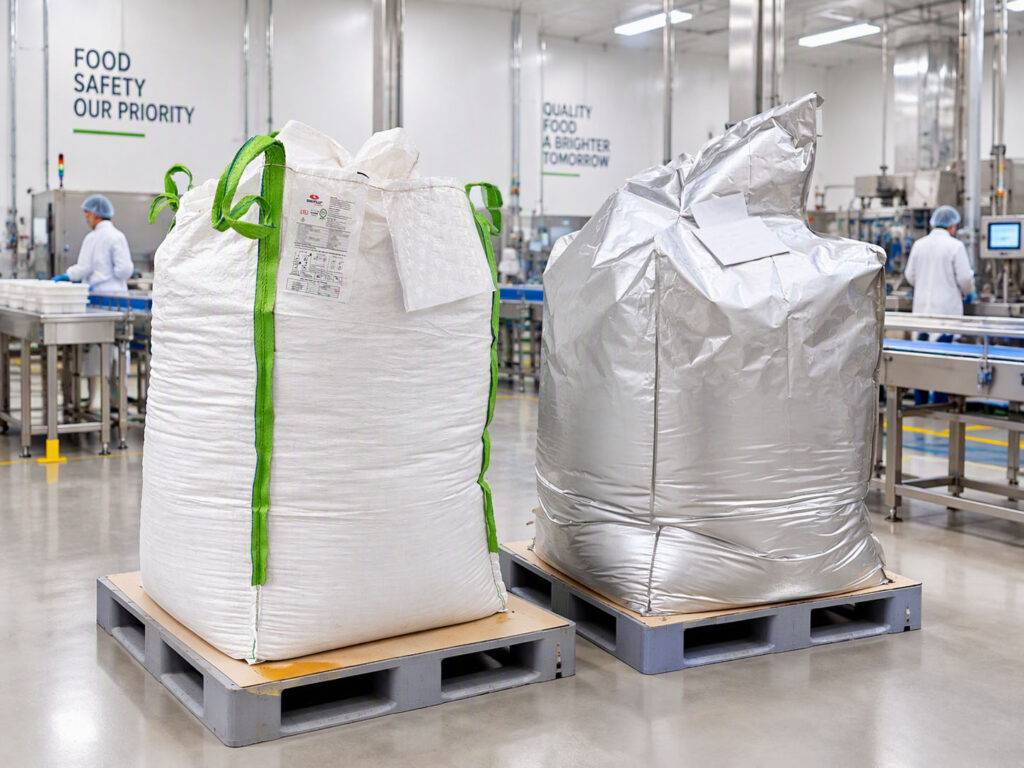
For a flexible bulk package, this assessment may include the woven polypropylene outer bag, internal polyethylene liner, thread, labels, closures and any printing. A food-contact declaration for the liner alone does not automatically make the complete bag food grade. The complete construction and the way it is used must be suitable.
Food grade packaging requirements start with the application
The first question is not simply, “Do you need a food grade bag?” It is, “What product is being packed and how will it move through your operation?” A dry food ingredient filled into a lined FIBC and discharged in a clean processing room needs a different solution from a product that will be stored outside, handled repeatedly by forklift and shipped internationally.
Start by defining the product and handling conditions: its physical form, moisture level, fat content, particle size, expected storage period, filling temperature and discharge method. Consider whether the product contacts the outer bag, the liner only or a discharge spout. Also identify the risk of foreign-body contamination. For fine powders, loose fibres, thread ends and unprotected filling spouts can be as operationally significant as chemical migration.
A well-specified bulk bag commonly uses virgin polypropylene fabric and a food-contact suitable liner, produced in a controlled environment. However, virgin material alone is not enough. The bag must be protected from contamination after manufacture and before filling. Packaging stored next to fuels, fertilisers, chemicals or dusty construction materials can lose its suitability before it reaches the production line.
Direct contact, indirect contact and barriers
A liner often provides the direct food-contact surface in an FIBC. This can simplify the selection of the outer bag, but only if the liner remains intact throughout filling, transport and discharge. Abrasion, punctures, damaged seams and poorly fitted liners can allow the food to contact the outer fabric or permit dust and moisture ingress.
The correct liner specification depends on the product. A standard loose liner may suit some dry, free-flowing materials. Form-fit liners can reduce creasing and improve handling, while baffle liners help retain the bag’s shape and can make better use of pallet or container space. Aluminium barrier films and specialist multilayer liners may be appropriate where oxygen or moisture protection is essential, but add cost and can affect recycling options.
Hygiene controls are part of the specification
Food grade packaging should be produced and handled under documented hygiene controls. Buyers should look beyond the finished bag and ask how contamination is prevented during conversion, packing and storage. Controlled manufacturing areas, cleaning routines, pest management, protected storage and staff hygiene procedures all contribute to the final product’s suitability.
For many food applications, bags are supplied with clean-room or controlled-environment production options, with liners inserted in a way that limits exposure. They may be individually packed or supplied in protective outer wrapping. The appropriate level of protection depends on the product risk and the customer’s filling environment. Excess packaging is not automatically better, but an open pallet of unprotected bags is rarely the right choice for a high-care ingredient operation.
Printing requires care too. If bags are branded or carry handling instructions, inks should be selected and positioned so they cannot transfer to food. External printing is generally preferable where possible. Labels, adhesive tapes and document pouches should likewise be assessed where there is a chance of contact with the packed product.
Documentation buyers should request
A supplier must be able to provide relevant supporting documentation for the materials and construction supplied. This gives procurement, quality and technical teams a clear audit trail rather than relying on a verbal assurance. All our food Grade Bulk Bags are PPWR compliant.
Choosing the right FIBC construction
The bag design must protect the food and work safely in the operation. Four-loop bulk bags are widely used for dry bulk ingredients, but filling and discharge options need to match the process. A fill spout with a tie closure can reduce exposure during filling. A coated fabric may improve resistance to dust ingress, while a discharge spout with a protective cover can support cleaner emptying.
For products that are sensitive to moisture, a sealed liner may be more important than a heavier outer fabric. For powders that generate dust, the focus may be on a sift-proof construction and controlled closure. Where a bag is used once only, a single-trip FIBC can support a straightforward hygiene and traceability programme. Reusing an FIBC for food is more complex and requires a validated inspection, cleaning and requalification process. In many food operations, the risk and administration make single-trip packaging the more practical choice.
Static control may also require consideration. Some powdered food ingredients can create combustible dust atmospheres. Where electrostatic risk is identified, the correct FIBC type must be selected as part of the site’s wider hazardous-area assessment. Food grade status and electrostatic performance are separate requirements, so both must be specified.
Storage, transport and site discipline
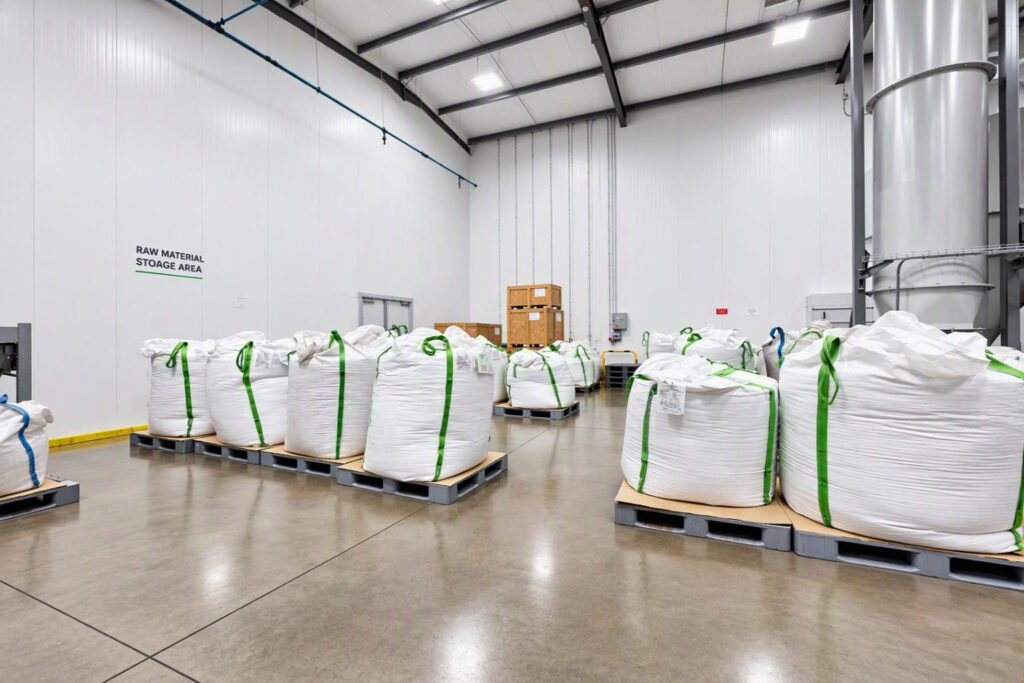
A compliant package can only protect a product if it arrives clean and intact. Keep empty bags in a dry, enclosed area, off the floor and away from chemicals, odorous materials and pest activity. Retain protective wrapping until close to use, and inspect each pallet or batch for damage, water exposure and contamination before it enters the filling area.
During transport, protect bulk bags from rain, condensation, tears and unsecured loads. A clean vehicle is fundamental, particularly when carrying food ingredients alongside other freight. Pallet wrap, pallet covers and appropriate load restraint can help maintain presentation and containment, but they do not compensate for unsuitable storage or a damaged liner.
At site level, clear segregation is essential. Food grade stock should be identifiable and physically separated from standard industrial packaging. This reduces the chance that a bag intended for aggregates, chemicals or waste handling is mistakenly introduced into a food packing process.
Work with a supplier that asks the right questions
The most reliable route to compliance is a packaging specification based on real operating conditions, not a catalogue description alone. A capable supplier will ask about the food product, liner requirement, filling method, storage, transport route, discharge arrangement, hygiene controls and required documentation before recommending a bag.
Smartlift Bulk Packaging can support this process with food-grade flexible packaging options and custom-built FIBC specifications for demanding bulk handling environments. The objective is practical: a package that protects the product, fits the process and provides the evidence your quality team needs.
When packaging is part of your food safety controls, treat it as a controlled production input rather than a commodity purchase. The right questions before ordering are far less costly than a rejected load, production stoppage or traceability investigation after delivery.
