


A burst watercourse, surface-water warning or failed drainage channel leaves very little time for purchasing decisions. The right flood defence sandbags supplier helps a site act before water reaches loading bays, door thresholds, plant rooms and stored stock. The wrong choice can mean bags that split during filling, unsuitable quantities, or deliveries that arrive after access routes are already affected.
For commercial and industrial sites, sandbags should be treated as a planned containment product rather than a last-minute emergency purchase. Specification, filling arrangements, storage conditions and delivery capability all affect whether they can be deployed safely and effectively when needed.
What a flood defence sandbags supplier should understand
A supplier should begin with the operational requirement, not simply the number of bags requested. A warehouse with several personnel doors has a different requirement from a construction site protecting temporary drainage, or an agricultural business managing water around barns, feed stores and access tracks.
Ask whether the supplier can establish where the bags will be used, how quickly they are needed, whether they will be stored on site, and who will fill and position them. These details determine the most suitable material, bag construction and supply format.
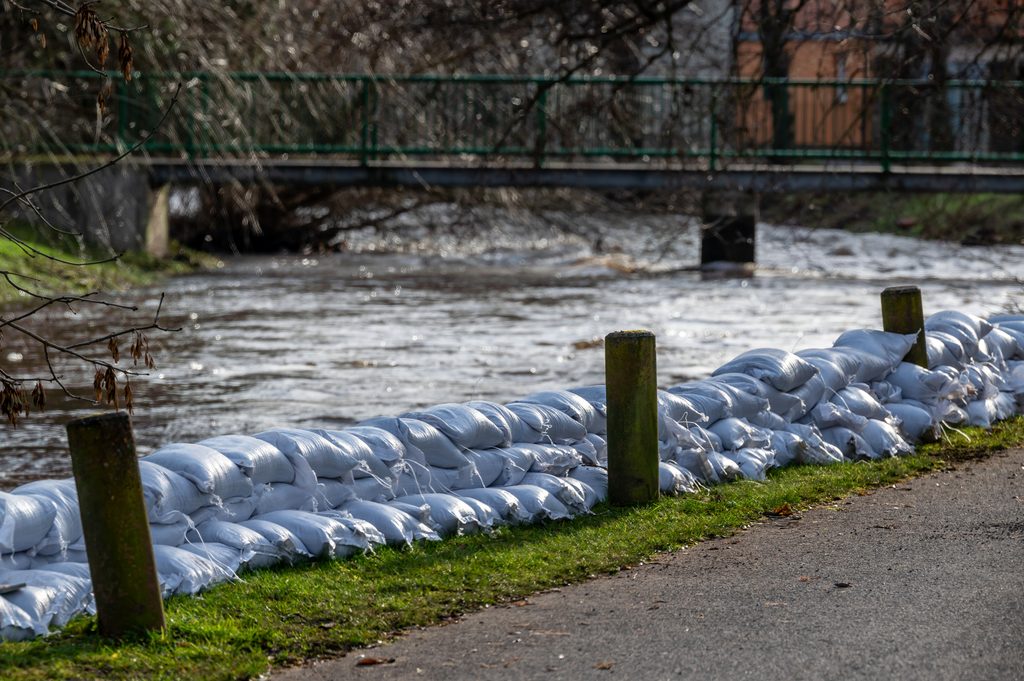
Flood defence sandbags are available either filled or unfilled, with both options offering distinct advantages depending on the requirements of the site and emergency response plan. Unfilled sandbags are often chosen for contingency stock because they can be stored compactly and filled locally when needed, provided there is access to suitable fill material, equipment and labour. Filled sandbags, however, offer an immediate deployment solution, helping organisations respond quickly when time and resources are limited. By offering both filled and unfilled sandbags, we can provide a solution that best suits your operational needs, storage capabilities and flood preparedness strategy.
Select the bag material for the site conditions
The two common choices are woven polypropylene and hessian. Both have valid uses, but their performance and end-of-use considerations differ.
Woven polypropylene sandbags
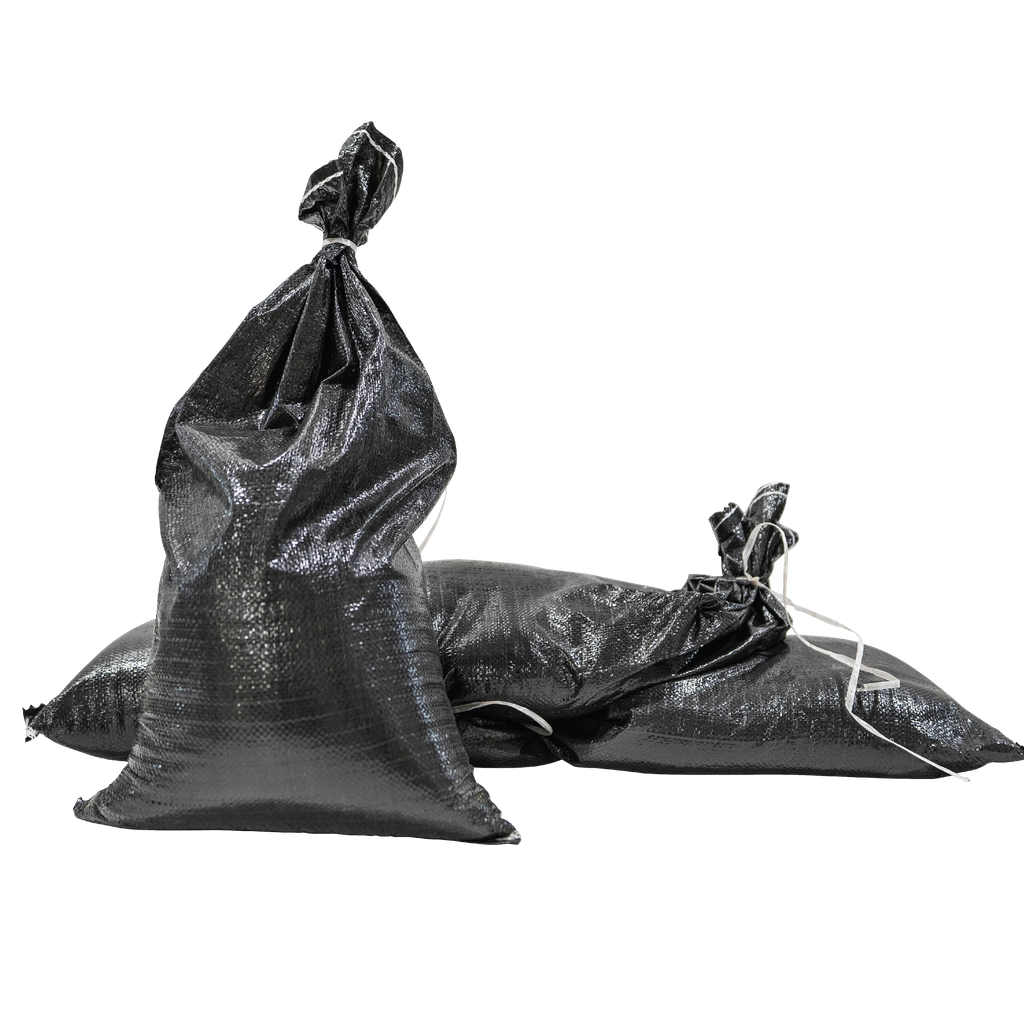
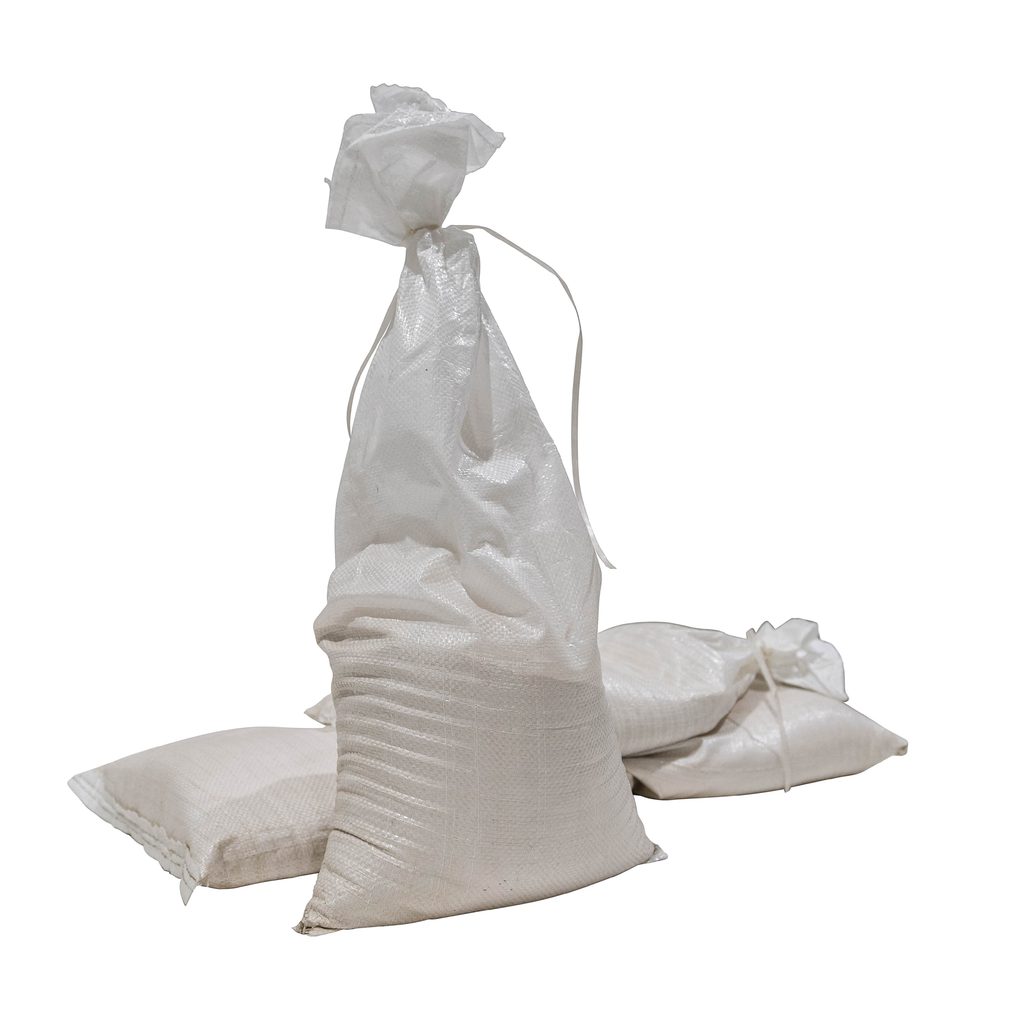
Polypropylene sandbags are widely used for commercial flood defence because they are strong, lightweight when empty and generally suited to bulk storage. Their woven construction supports filling and handling, while their resistance to moisture makes them a practical choice for emergency stock held in warehouses, yards and maintenance stores.
For outdoor storage or prolonged exposure, ask about UV stabilisation. Standard woven polypropylene can degrade if left in direct sunlight over time. UV-treated bags are more appropriate where stock will be kept in external compounds, on construction sites or in exposed agricultural locations.
Consider the closure method as well. Some bags have an integrated tie, while others are supplied without one. A tie can speed up placement and reduce the need for additional materials, but it must be strong enough for the intended fill weight and handling method.
Hessian sandbags
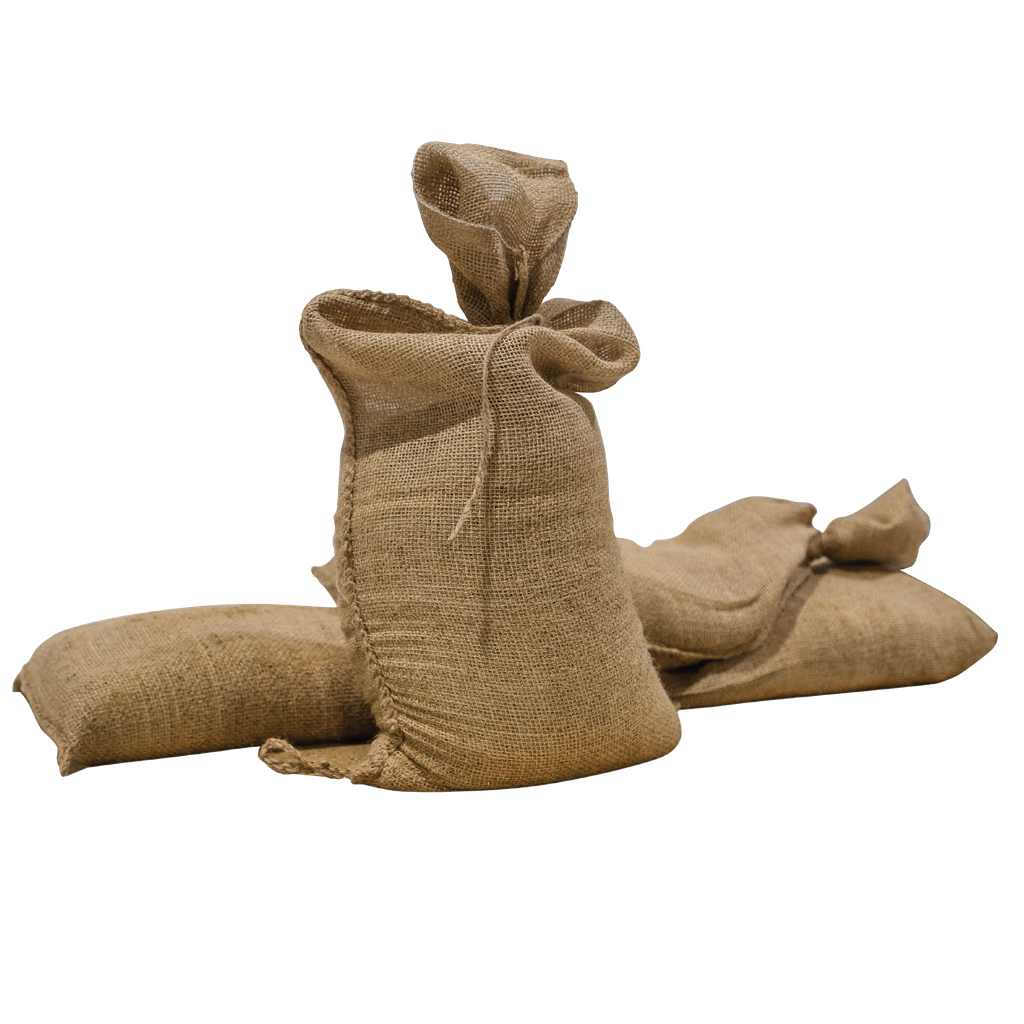
Hessian is a natural fibre option often selected where biodegradability, appearance or traditional use is a priority. It can be appropriate for landscaping, temporary works and certain local flood defence requirements. Its natural composition may also suit projects where removal and disposal routes favour biodegradable materials.
The trade-off is durability. Hessian can deteriorate more quickly in wet conditions than polypropylene, particularly where bags are exposed for extended periods. For a short-term barrier this may be acceptable. For contingency stock intended to remain serviceable over a long period, polypropylene is often the more dependable operational option.
A capable supplier should explain that there is no universally best material. The appropriate bag depends on storage duration, expected exposure, filling method, environmental policy and the likely length of deployment.
Specify the right size and construction
A standard sandbag size is familiar to many site teams, but dimensions alone do not define suitability. Fabric weight, weave quality, seam construction and closure design influence how reliably a bag performs during filling, transport and stacking.
Bags are normally filled to around half to two-thirds of their capacity so they can be shaped and overlapped properly. Overfilled bags are harder to position, more likely to tear and less effective at creating a close barrier. A supplier should be able to advise on the intended fill level and whether the selected sack will accommodate it without putting undue strain on the seam.
For high-volume requirements, consistency matters. Variations in bag size or fabric quality make it harder for teams to build stable rows quickly. This is especially relevant when several crews are working across a large site or when bags are being filled using a hopper or mechanical filling arrangement.
It is also worth clarifying whether bags will be moved manually, by pallet truck, forklift or loader. Sandbags are a manual-handling risk once filled. The choice of bag should sit alongside a realistic handling plan rather than assuming staff can lift and place heavy loads repeatedly during severe weather.
Check stock availability before a warning is issued
Flood-related demand can rise sharply when weather warnings are announced. A flood defence sandbags supplier with dependable stockholding and clear lead times gives purchasing and operations teams a stronger basis for planning.
Do not rely on a catalogue description alone. Confirm the quantity available, the minimum order quantity, dispatch times, pallet quantities and any restrictions affecting delivery to your site. If you operate multiple depots or projects, establish whether stock can be delivered to each location or held centrally for redistribution.
For businesses in areas with repeated surface-water or river flooding, planned stock is normally preferable to reactive ordering. Holding empty sandbags in a dry, accessible location reduces pressure on procurement teams and avoids competing for scarce availability during a regional event.
Storage conditions deserve attention. Keep bags dry, protected from direct sunlight where relevant, and away from sharp edges, chemicals or vehicle traffic that could damage the fabric. A clearly marked flood-response store, positioned near likely deployment areas, saves valuable time when conditions change.
Consider the full flood defence system
Sandbags can redirect shallow flows, protect low-level openings and support temporary barriers. They are not a guaranteed watertight solution, particularly against deep, fast-moving or long-duration floodwater. Water can penetrate through the bag fabric and between bags, while prolonged saturation can affect the stability of a barrier.
That does not reduce their value. It means the purchasing decision should be connected to the wider site flood plan. Identify priority areas such as external doors, air bricks, service entries, stock storage zones, fuel or chemical stores, electrical equipment and access roads. Determine the bag quantity needed for each location, including a contingency allowance for changes in water direction.
Teams should also know how to lay bags. Bags are generally placed lengthways and overlapped like bricks, with the neck tucked beneath the bag. A plastic sheet or suitable liner may be used behind a barrier where appropriate to reduce seepage, but the detail should match the site’s risk assessment and emergency procedures.
Where floodwater may be contaminated, businesses must also plan for safe removal, cleaning and disposal after the event. Used bags and their contents can be heavy, polluted or unsuitable for reuse. This should be assessed before deployment, not after water levels fall.
Questions to ask before placing an order
A useful supplier conversation should cover more than price per bag. Ask whether the bags are polypropylene or hessian, whether polypropylene is UV stabilised, and whether ties are included. Confirm bag dimensions, fabric specification, pack size and the recommended storage conditions.
Discuss the quantity needed for your openings and perimeter, whether the bags are supplied empty or filled, and how quickly they can be delivered. If the product is for a contract, local authority requirement or regulated site, request the relevant product information and make sure it aligns with your project specification.
Commercial buyers should also consider continuity. A very low unit price has limited value if the product is inconsistent, unavailable when required or supplied without the technical detail needed to approve it internally. The better purchasing decision considers product fit, availability, handling and whole-site risk together.
Plan ahead with a packaging partner
Flood preparedness is strongest when it is built into normal site planning, alongside stock protection, drainage maintenance and business continuity procedures. A supplier with experience in industrial packaging can help match sandbags to the operating environment, whether the requirement is a small reserve for a warehouse or pallet quantities for a multi-site operation.
Smartlift Bulk Packaging supports businesses with woven polypropylene and hessian sandbag options, alongside practical advice on packaging suitability and supply. The aim is to provide a product that can be stored, filled and deployed with confidence when conditions demand action.
Before the next period of severe weather, walk the site, measure the vulnerable points and check that your sandbag stock can be reached, filled and used by the people responsible for protecting the operation.
To request a quote head over to our Sandbag page
